Autonomous Surface Robotics for Navigable Inland Waterways & Canals
Inland waterways, river channels, and navigational canals serve as primary arteries for commercial freight, municipal transport, and regional tourism. Maintaining continuous navigable clarity across extensive river networks is challenging due to constant flows of waterborne debris, agricultural runoff, and seasonal organic waste that threaten vessel propulsion and canal infrastructure.
Deploying L4 autonomous surface cleaning vessels and remote water quality monitoring units equips waterway authorities and canal management agencies with scalable, 24/7 automated river maintenance—ensuring unobstructed transit and verified environmental health.
Key Challenges in Inland Waterway Management
-
Continuous Flow of Floating Hazards: River currents carry plastic bottles, fallen branches, packaging, duckweed, and seasonal leaf surges, creating navigation hazards in lock approaches and narrow channels.
-
Complex Hydrodynamics & Narrow Channels: Operating traditional manned cleaning boats in narrow canals or high-current river locks creates safety risks for operators and disrupts commercial vessel traffic.
-
Data Gaps Across Long River Spans: Monitoring water quality across dozens or hundreds of kilometers of riverbanks via manual sampling is labor-intensive and fails to pinpoint sudden pollution origin points.
-
High Labor Overhead & Operational Costs: Continuous manned patrolling across vast river systems requires extensive fuel budgets, specialized boat crews, and ongoing maintenance.
Autonomous Solutions for Navigable Waterways
1. High-Efficiency Channel Sweeping & Debris Clearance
-
Continuous Canal Sweeps: Autonomous cleaning vessels execute scheduled coverage patrols along river channels, canal bottlenecks, and lock entry gates.
-
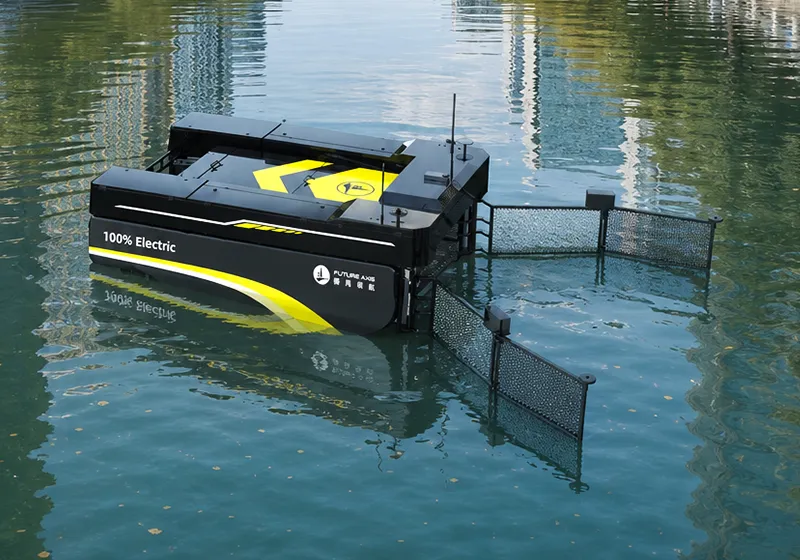
Heavy Debris Interception: Designed to capture and load up to 100 kg of solid floating waste per run—including plastic debris, packaging, fallen leaves, duckweed, and floating organic matter—preventing intake clogs and propeller jams.
-
Expandable Sweeping Reach: Dynamic robotic arms extend collection widths up to 2.8 meters in open rivers while folding neatly to navigate narrow canal banks and lock chambers.
-
Autonomous Docking & 24/7 Readiness: Units automatically return to mobile shore docks or floating charging platforms when battery levels drop below 20%, ensuring continuous operations with zero onshore civil construction needed.
2. Longitudinal Water Quality Surveillance & Sampling
-
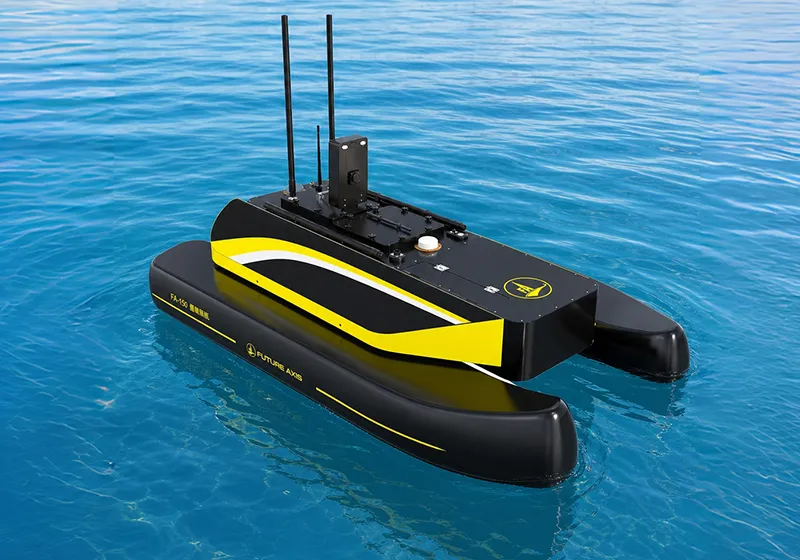
Multi-Parameter Sensor Payload: Real-time tracking of critical river health indicators, including pH, dissolved oxygen (DO), turbidity, conductivity, salinity, ORP, chlorophyll-a, blue-green algae, and ammonia nitrogen.
-
GPS-Anchored Physical Water Sampling: Automated multi-bottle peristaltic pumping systems draw physical samples at precise GPS coordinates when contamination anomalies are detected, supplying lab-verified data for regional regulatory reporting.
-
Signal-Denied Bridge & Culvert Navigation: Dual-antenna RTK-GNSS paired with onboard Inertial Navigation Systems (IMU) guarantees precise position tracking under low-clearance bridges, covered river culverts, and high embankment walls.
Strategic Value for Waterway Authorities
-
Up to 75% Operational Cost Savings: Autonomous fleets replace labor-intensive crewed boat shifts, significantly reducing fuel consumption, staffing overhead, and equipment wear.
-
Uninterrupted Navigation & Lock Safety: Proactive debris interception keeps locks, intakes, and shipping lanes clear, preventing costly vessel downtime.
-
Centralized Fleet & Data Telemetry: Operational progress, live GPS tracking, and real-time water quality charts stream directly via 4G/LTE to regional river control hubs and GIS dashboards.
WELCOME TO FA
We focus on every single detail. OEM & ODM high-end quality products for the international brands.
 All Scenarios