Your complete guide to caring housekeeping and beyond.
We try to answer the most common quertions if you have additional questions.
Please contact our professional team to answer your questions.
Contact usOur surface cleaning robots and water quality monitoring boats are built for inland and coastal environments, including urban rivers, lakes, reservoirs, artificial ponds, scenic waterways, and industrial basins.
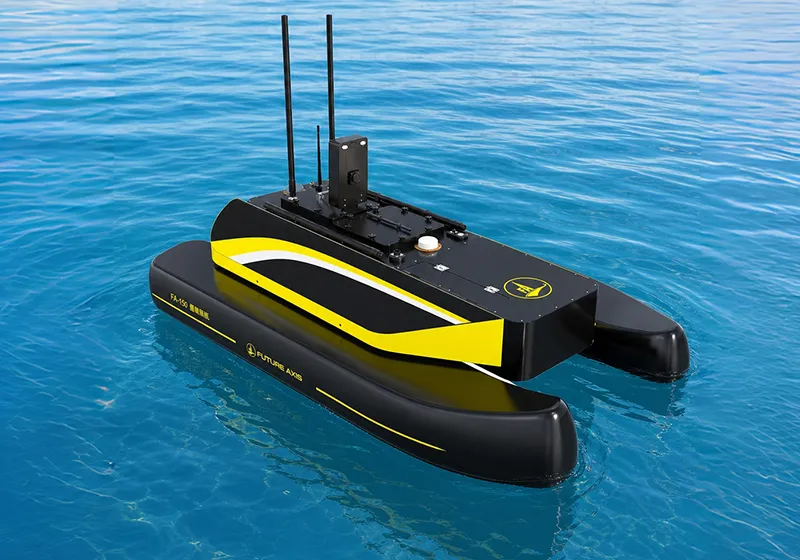
They utilize L4-level autonomous navigation powered by high-precision RTK-GNSS positioning, IMU, and multi-sensor perception (such as LiDAR, millimeter-wave radar, and cameras) to dynamically plan paths and bypass floating or static obstacles in real time.
When the battery reaches a predefined threshold (e.g., 20%), the boat automatically interrupts its task and returns to its designated charging dock or station to recharge, ensuring uninterrupted fleet operations.
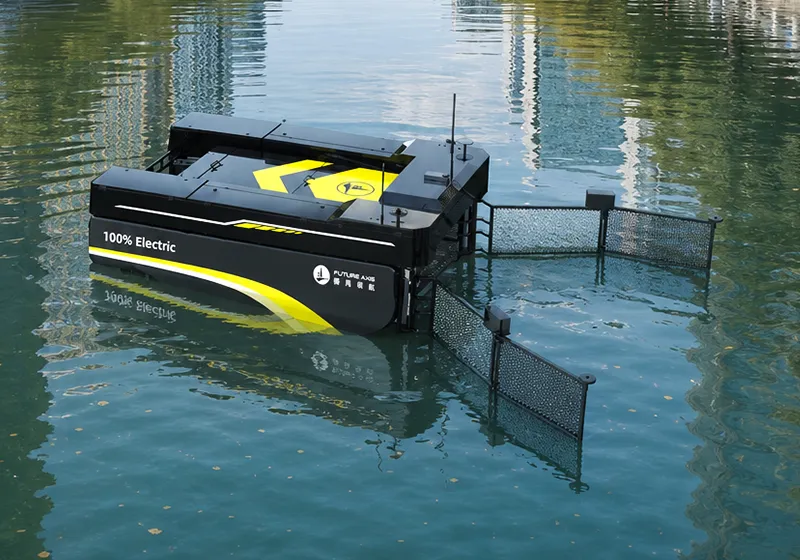
The cleaning robot can automatically collect a wide range of floating debris, including plastic bottles, packaging, fallen leaves, algae, duckweed, and small branches, with flexible arms that expand its coverage area.
Depending on the model configuration, the onboard waste basket supports up to 100 kg of payload capacity.
The brushless thrusters feature specialized anti-winding and anti-collision protective covers, preventing aquatic weeds, ropes, or floating debris from jamming the propellers.
The boat supports multi-parameter sensors capable of measuring pH, dissolved oxygen (DO), turbidity, conductivity, salinity, ORP, chlorophyll-a, blue-green algae, ammonia nitrogen, and oil-in-water in real time.
Yes, in addition to real-time sensor measurements, the boat includes an automated multi-bottle peristaltic pumping system that safely collects physical water samples at designated GPS coordinates for further lab analysis.
All collected parameters and high-definition visual imagery are wirelessly transmitted in real time via 4G/LTE to a centralized cloud platform, enabling automated data logging, trend visualization, and customizable threshold alerts.