
Streamlining Municipal Water Infrastructure & Public Waterway Governance
Municipalities and local government entities face growing pressure to manage urban water networks, safeguard public health, and comply with strict environmental regulations. From historic inner-city canals and public reservoir basins to stormwater management systems and municipal park lakes, traditional manual upkeep is increasingly labor-intensive, costly, and hazardous.
By integrating L4-level autonomous surface cleaning vessels and remote water quality monitoring platforms, municipal public works departments can modernize their operational workflows, drastically reduce field risk, and optimize taxpayer-funded maintenance budgets.
Core Administrative & Operational Challenges
-
Escalating Municipal Operational Costs: Maintaining manual boat fleets and dedicated water sanitation crews strains local government budgets and strains municipal staffing allocations.
-
Strict Regulatory Compliance: Municipalities face stringent mandates for environmental data reporting, water safety metrics, and pollution prevention in public waterways.
-
Worker Safety & Liability Risks: Manual trash collection, manual sample gathering, and operating vessels in high-traffic or deep-water public areas expose municipal employees to ongoing safety risks.
-
Unpredictable Runoff & Debris Accumulation: Seasonal storms, urban runoffs, and high foot-traffic events cause sudden influxes of floating plastics and organic waste that overwhelm static municipal trash traps.
Autonomous Robotic Solutions for Municipal Public Works
1. High-Efficiency Surface Cleaning & Waste Management
-
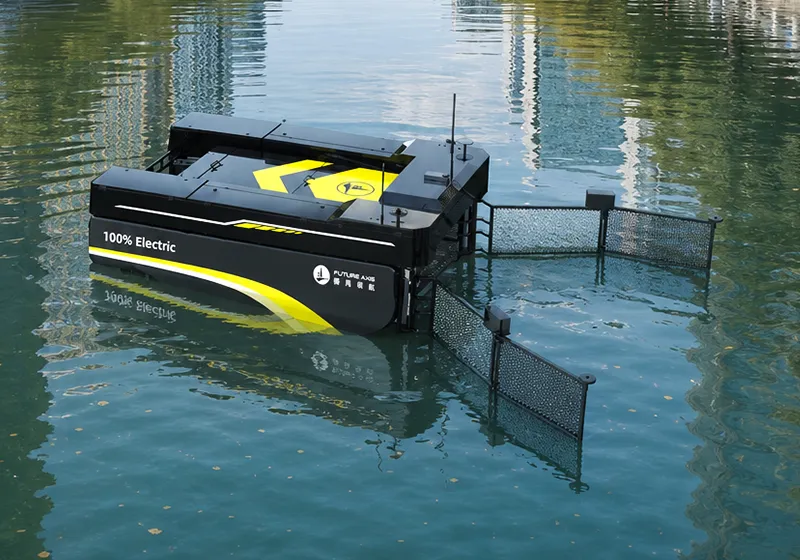
Scalable Fleet Patrols: Unmanned cleaning vessels execute automated coverage sweeps across public lakes, urban canals, water supply reservoirs, and municipal basins.
-
Versatile Waste Capture: Designed to intercept and load up to 100 kg of solid floating waste per run—including plastic debris, packaging, fallen leaves, duckweed, and floating organic matter.
-
Adaptive Reach for Narrow Channels: Dynamic expandable arms adjust collection widths up to 2.8 meters, allowing the vessel to service wide public lakes as easily as tight municipal waterways and embankment edges.
-
Infrastructure-Free Deployment: Autonomous dock return capabilities enable automated inductive charging and 24/7 continuous shift work with zero complex onshore construction needed.
2. Automated Regulatory Monitoring & Water Sampling
-
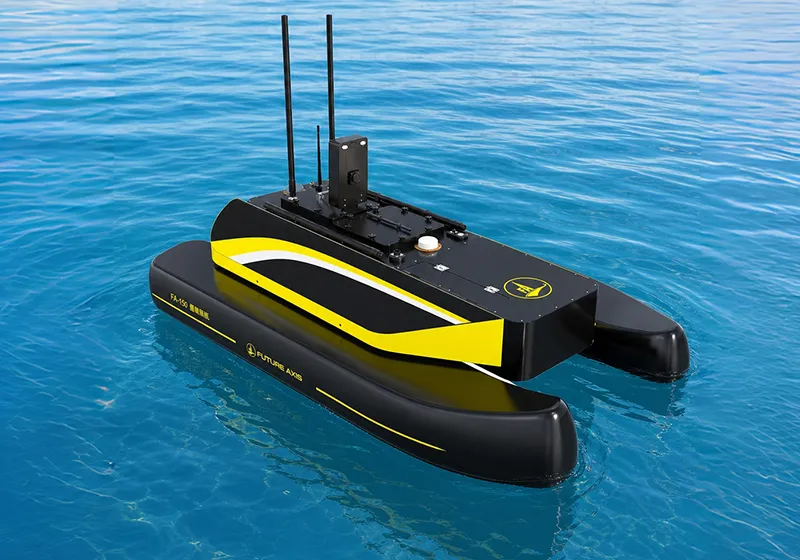
Multi-Parameter Surveillance: Continuous tracking of critical environmental health indicators, including pH, dissolved oxygen (DO), turbidity, conductivity, salinity, chlorophyll-a, blue-green algae, and ammonia nitrogen.
-
Compliant Lab-Grade Sampling: Automated multi-bottle peristaltic pumping systems pull physical water samples at exact GPS coordinates for verified laboratory validation.
-
GPS-Denied & Bridge Navigation: Dual-antenna RTK-GNSS paired with onboard Inertial Navigation Systems (IMU) ensures full navigation stability under municipal bridges, covered culverts, and urban overpasses.
Municipal Impact & Taxpayer Value
-
Up to 75% Operational Cost Savings: Replacing repetitive manual boat crew shifts with autonomous fleets substantially lowers labor costs and long-term municipal equipment overhead.
-
Centralized Public Dashboard Integration: Telemetry, GPS tracking, and real-time water quality metrics feed directly into municipal GIS and smart city management platforms via 4G/LTE.
-
Enhanced Environmental Stewardship: Proactive, zero-emission water maintenance protects local biodiversity, minimizes municipal carbon footprints, and elevates public satisfaction.
WELCOME TO FA
We focus on every single detail. OEM & ODM high-end quality products for the international brands.
 All Scenarios